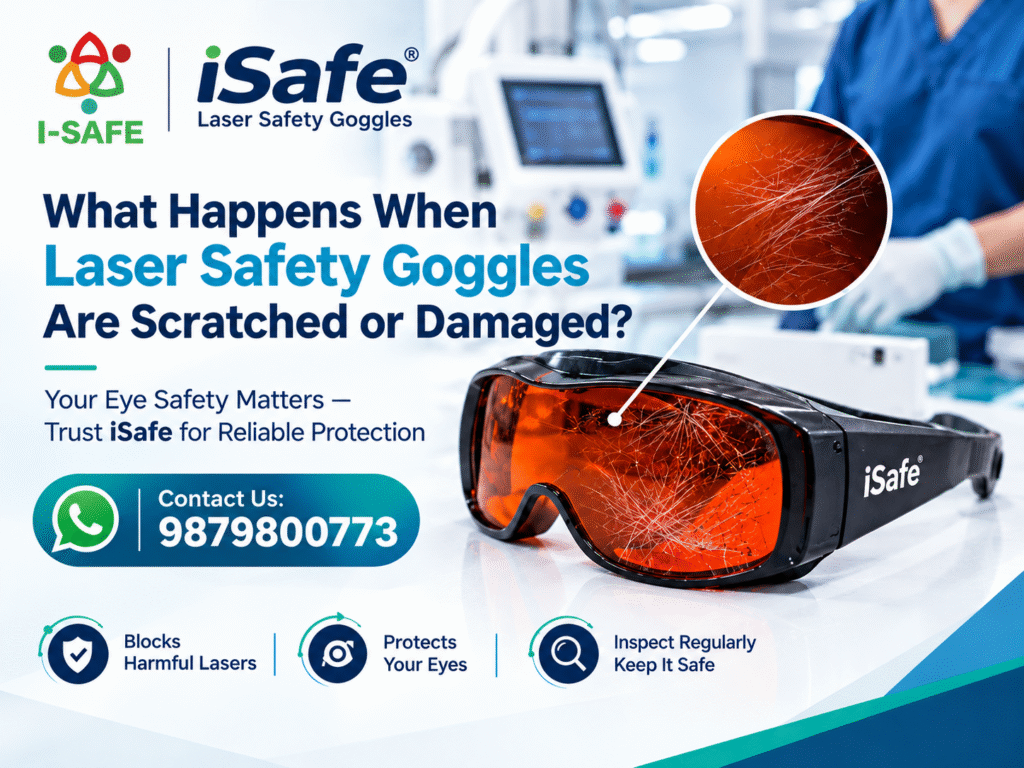
Laser safety goggles play a critical role in protecting your eyes from hazardous laser radiation. However, scratched or damaged laser safety goggles may affect visibility, comfort, and the reliability of your eye protection. Even minor damage deserves attention, especially when you work with high-powered lasers in medical, industrial, research, or aesthetic environments.
At iSafe, we understand the importance of reliable laser eye protection. Therefore, professionals should inspect their eyewear regularly, follow the manufacturer’s care instructions, and replace goggles whenever damage could compromise their safety.
In this guide, we explain the risks of damaged laser eyewear, how to inspect your goggles, and when to replace them.
Why Are Scratched or Damaged Laser Safety Goggles a Concern?
Laser safety goggles use specialised optical filters designed for specific wavelengths and laser exposure levels. Unlike ordinary protective eyewear, they must provide protection appropriate to the laser being used.
If you see scratches, cracks, chemical damage, or coating deterioration, don’t assume the goggles remain safe. Although a surface scratch does not automatically mean the filter has lost its specified optical density, damage can affect visibility and may indicate a more serious problem.
For this reason, always inspect your scratched or damaged laser safety goggles before use.
1. Reduced Reliability of Eye Protection
Laser eyewear must match the laser’s wavelength, operating conditions, and required protection level. Damage to the filter, substrate, or protective coatings may affect its performance.
For example, deep scratches, cracks, delamination, or chemical deterioration can compromise the condition of the eyewear. As a result, you should remove visibly damaged goggles from service until the manufacturer or a qualified safety professional determines whether they remain suitable.
Safety tip: Never judge laser protection by appearance alone. Clear-looking lenses are not necessarily safe, and scratched lenses are not automatically ineffective. Follow the manufacturer’s inspection and replacement criteria.
2. Blurred Vision, Glare, and Visual Discomfort
Scratched lenses can scatter visible light and create distracting glare. Consequently, users may experience reduced visual clarity, discomfort, or difficulty seeing instruments and treatment areas.
These issues are particularly concerning during laser hair removal, dermatological procedures, aesthetic treatments, and precision industrial work.
For professionals using CO2, Nd, diode, Alexandrite, or other laser systems, clear vision supports accurate work. However, visual clarity alone does not confirm that the eyewear provides adequate laser protection.
3. Possible Damage to Optical Filters and Coatings
Laser safety goggles may contain specialised filters, coatings, and optical materials. Repeated abrasion, unsuitable cleaning products, excessive heat, or exposure to incompatible chemicals can damage these components.
Moreover, cracks and peeling layers may indicate that the eyewear needs professional assessment or replacement.
Therefore, avoid abrasive cloths, harsh solvents, and unapproved cleaning methods. Instead, use the cleaning products and procedures recommended by the manufacturer.
4. Uncertainty About Safety Standards
Laser protective eyewear may be tested or certified against standards such as EN 207 or EN 208, depending on its intended application.
However, visible damage, an unreadable product label, or missing identification can make it difficult to verify that the eyewear remains appropriate for the intended laser system.
Never assume that previously compliant goggles remain suitable after damage. Check the manufacturer’s guidance and consult your laser safety officer or supplier if you have concerns.
5. A Shorter Usable Lifespan
Poor storage, frequent abrasion, improper cleaning, and accidental drops can shorten the usable life of laser safety goggles.
Fortunately, regular inspection and correct handling can help preserve their condition. Nevertheless, replace damaged eyewear when the manufacturer recommends replacement or when its suitability can no longer be confirmed.
Choosing suitable, well-maintained iSafe goggles can support a consistent laser safety routine when the selected model matches your laser’s requirements.
How to Inspect Laser Safety Goggles Before Use
Before every use, follow your workplace’s laser safety inspection procedure. Pay attention to these areas:
- Lens surface: Look for scratches, cracks, chips, cloudiness, peeling, or other visible deterioration.
- Frame and joints: Check for loose hinges, broken sections, and poor alignment.
- Fit and coverage: Confirm that the goggles fit securely and provide the required coverage for your application.
- Labels and markings: Verify that the wavelength range and protection specifications are readable.
- Cleaning and storage: Check for residue, contamination, or signs of improper handling.
If you discover damage, stop using the goggles until their suitability has been confirmed. Do not attempt to repair damaged optical filters with household products or unapproved coatings.
When Should You Replace Laser Safety Goggles?
Replace your goggles, or remove them from service for professional assessment, when:
- The lenses have cracks, chips, or serious scratches.
- The filter or coating shows peeling, separation, or deterioration.
- The frame no longer provides a secure and reliable fit.
- The required wavelength or protection markings are missing or unreadable.
- The eyewear has been exposed to chemicals, heat, or impact that may have caused damage.
- The manufacturer specifies replacement, or the goggles fail an approved inspection.
Importantly, do not continue using questionable eyewear simply because replacement seems inconvenient. Protecting your eyes must remain the priority.
How to Prevent Scratches and Damage
You can help maintain your laser eyewear by following a few simple practices:
- Use an appropriate storage case: Store goggles in a clean, protective case when they are not in use.
- Clean them correctly: Follow the manufacturer’s cleaning instructions and use approved materials.
- Avoid lens contact: Handle the goggles carefully and avoid placing the lenses against hard or abrasive surfaces.
- Keep them away from chemicals: Prevent contact with cleaning agents or substances that could damage the filters or coatings.
- Inspect them regularly: Check their condition before use and after accidental drops or other incidents.
- Follow replacement guidance: Maintain inspection records where required and replace eyewear according to the manufacturer’s recommendations.
These steps can help extend the service life of suitable eyewear. However, good maintenance does not replace the need for correct wavelength selection and appropriate laser protection.
Why Choose iSafe Laser Safety Goggles?
At iSafe, laser eye safety is the priority. Selecting suitable laser safety goggles requires more than choosing a lens colour or a comfortable frame. You must verify that the eyewear is appropriate for the laser wavelength, operating conditions, and required level of protection.
When evaluating iSafe goggles, check the model’s specifications, wavelength range, optical density or applicable protection rating, certification information, and care instructions. These details help you determine whether a particular model is appropriate for your workplace or procedure.
Whether you work in dermatology, laser hair removal, aesthetic clinics, medical environments, or industrial applications, select eyewear based on the actual laser hazards involved.
Remember: Even high-quality laser safety goggles require regular inspection and proper care. If you notice damage, stop using the eyewear until its suitability has been confirmed.
Protect Your Vision with the Right Laser Safety Practices
Scratched or damaged laser safety goggles should never be ignored. Although some surface marks may primarily affect visibility, more serious damage can create uncertainty about the eyewear’s protective performance.
Therefore, inspect your goggles regularly, follow manufacturer instructions, and replace or professionally assess damaged eyewear when necessary.
For information about suitable laser eye protection, contact iSafe Laser Safety Goggles.
Visit our store: https://isafelasergoggles.com/shop-2/
Follow us on Instagram: https://www.instagram.com/alphasurgicals?igsh=cTdjYWNtaXkxazl
Visit us for all dermatology instruments: https://alphasurgicals.com/store/